
The Death of the 'Price Adjustment' Form: How Anthropic's Sonnet 4.6 Automates Costco Refunds

The Death of the 'Price Adjustment' Form: How Anthropic's Sonnet 4.6 Automates Costco Refunds
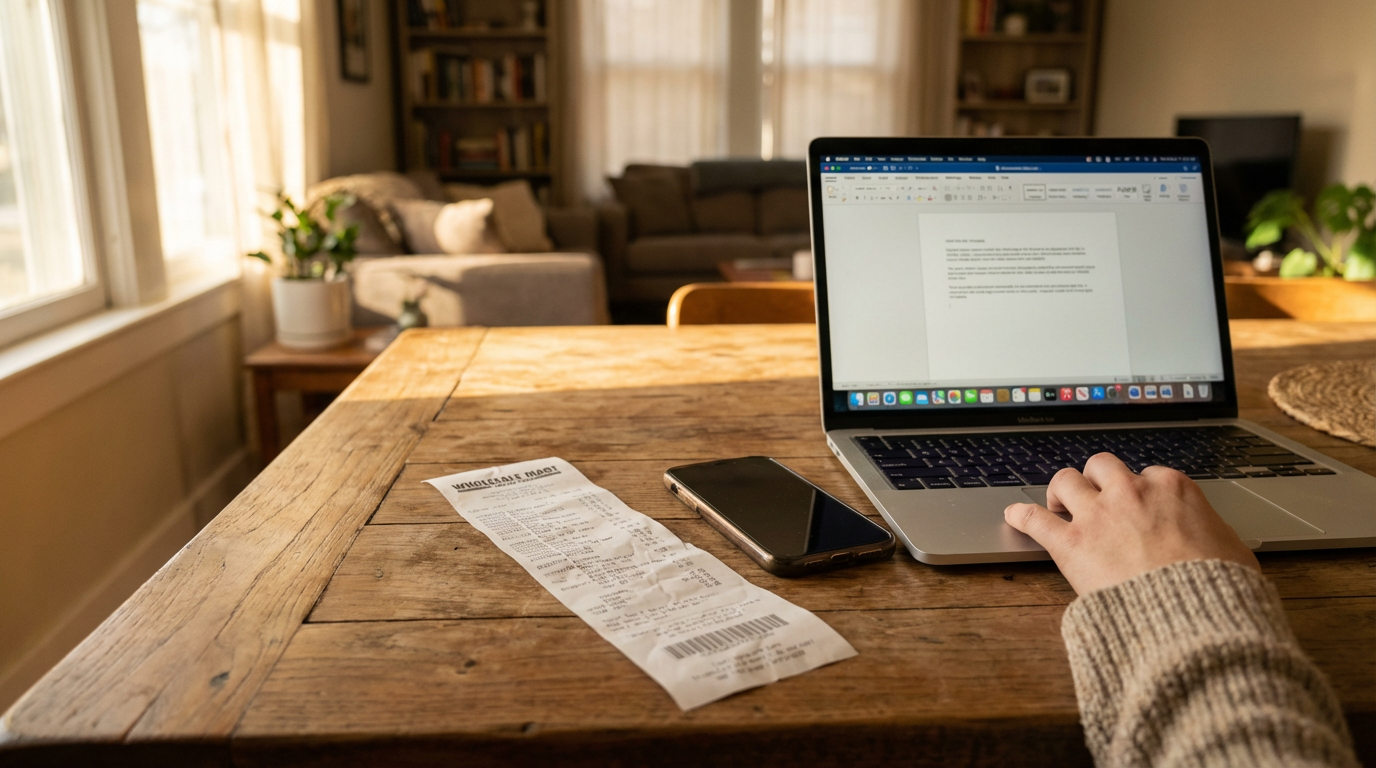
You bought a Samsung 85" TV at the warehouse last week for $1,499. This morning, you walk in and see it priced at $1,299. You know Costco has a generous 30-day price adjustment policy. You also know that claiming that $200 requires finding your receipt, navigating to the specific online form, and typing in the item number, warehouse location, and membership details perfectly.
Most people don't do it. The friction of the form costs Costco members millions in unclaimed refunds every year. In fact, refund volumes in the global retail sector rose by 18.1% in 2025, yet a significant portion of price-drop claims remain unfiled simply because the paperwork is a hassle (ACI Worldwide, 2026).
But as of this morning, the calculus changed. Anthropic released its newest AI model, Claude Sonnet 4.6, and for the first time, we have a tool capable of navigating that friction for you. This isn't just another chatbot update; it is a shift in how consumers can enforce price guarantees without doing the manual labor themselves.
Key Takeaways
The News:** Anthropic released Sonnet 4.6 today (Feb 17, 2026), featuring "Computer Use" capabilities that navigate websites like a human. The Application:** This allows the AI to autonomously fill out Costco's tedious online Price Adjustment forms by reading your digital receipts. The Cost:** With pricing at $3 per million input tokens, the cost to audit a year's worth of receipts is fractions of a penny compared to potential refunds. The Shift:** We are moving from "manual tracking" to "agentic shopping," where software performs the labor of claiming money back.
The "Computer Use" Breakthrough
Until today, using software to track Costco price drops required one of two things: the patience of a saint or the coding skills of a systems engineer. You either checked the website daily yourself, or you knew how to script Python to scrape data—a barrier that kept 99% of shoppers on the sidelines.
According to CNET's coverage of the launch today, Sonnet 4.6 features "Computer Use" capabilities that operate at a "human baseline level." This is the distinction that matters. Previous AI models could write a poem about savings; Sonnet 4.6 can actually move a cursor, click a text box, and type your membership number.
Computer Use — A capability where an AI model interacts with user interfaces (browsers, forms, desktop apps) by viewing screenshots and sending virtual keystrokes, rather than just processing text.
For a Costco member, this solves the specific problem of the "Price Adjustment" form. This form is designed—whether by design or by accident—with high friction. It requires specific data points found only on the physical or digital receipt. Jon Reed, Senior Editor at CNET, notes that this model "doesn't necessarily need specific software connectors or tools to do things like follow a spreadsheet or browse the internet." It simply looks at the screen and does the work.
No More APIs: The Zero-Setup Agent
For years, platforms like "Droply" or the open-source "Costco Price Match Agent" (referenced by AWS Plain English on Feb 14, 2026) attempted to solve this. The problem was infrastructure. You had to set up servers, manage API keys, or deploy code to Amazon Web Services.
That era ended this morning.
Because Sonnet 4.6 targets "browser-based workflows" directly (Source: CNET, 2026-02-17), the barrier to entry collapsed. A parent who doesn't know a JSON file from a JPEG can now upload a PDF of their monthly Costco receipt and give a simple instruction: "Check these items against current prices on Costco.com, and if any are lower, fill out the adjustment form for me to review."
TechCrunch reports that these new "Agentic" capabilities allow the model to autonomously cross-reference purchase dates with current sales. This aligns with broader industry trends: Mordor Intelligence (2025) estimates the Agentic AI market in retail will reach $60.43 billion by the end of 2026, driven specifically by this shift from static software to autonomous agents that handle complex tasks without supervision.
The Economics of Automation
Is it worth using a sophisticated AI to save $15 on a blender? The math is laughably simple.
According to Anthropic's pricing page released today, Sonnet 4.6 costs $3 per million input tokens. To put that in perspective, a standard Costco receipt containing 20 items consumes roughly 500 to 1,000 tokens. This means you could process over 1,000 receipts for the price of a single hot dog combo.
Efficiency matters because of volume. The model introduces a 1 million token context window (Source: SiliconANGLE, 2026-02-17), allowing you to feed it two years of purchase history in a single prompt. It can scan that history against a list of today's "Manager's Special" markdowns in seconds.
As the Anthropic Press Team put it in their official announcement: "Across agentic coding, computer use... and finance, [Sonnet 4.6] is an industry-leading model." For the consumer, this translates to an automated auditor that works for pennies. The ROI is clear when you consider that automated savings tools already generate nearly $17 billion in additional deposits for consumers annually (Forbes, 2021).
Why This Matters for Bargain Hunters
The "Manager's Special" (often denoted by prices ending in .97 or .00) is notoriously difficult to track online because inventory varies by zip code. A human cannot check 50 past purchases against local inventory daily. It is boring, repetitive work.
Machines love boring work.
Market analysts from the AI Markets Brief (2026-02-15) observed that we are entering a phase of "Service-as-Software," where AI performs labor rather than just providing information. For the Costco shopper, this means the difference between knowing you missed a deal and automatically claiming the refund before the sale ends. This capability is rapidly becoming standard; Deloitte (2025) predicts that 50% of enterprises using GenAI will deploy these types of autonomous agents by 2027, signaling that "agentic shopping" will soon be as common as mobile banking.
The "Human in the Loop" Safety Net
For all the hype, we need to be realistic about the limitations. Kyt Dotson, writing for SiliconANGLE today, warns that "The model still lags behind most skilled human reasoning at times."
This caution is shared by consumers. According to Bain & Company (2025), while adoption is high, 50% of consumers remain cautious about allowing AI agents to fully execute purchases or financial transactions without supervision.
For CostRefund users, this means oversight is still necessary. You wouldn't hand your credit card details to an autonomous agent without looking over its shoulder. The best approach currently is to use Sonnet 4.6 to prepare the forms—filling in the item numbers, dates, and prices—and then stop to let a human click "Submit."
This hybrid approach removes 90% of the drudgery while maintaining 100% of the security. It ensures that when you do claim that price drop on your new OLED TV, the details are accurate and your refund is processed without flagging Costco's fraud detection systems.
Frequently Asked Questions
Can Claude Sonnet 4.6 actually log into my Costco account?
Yes, the new "Computer Use" capability allows the model to navigate login screens and input credentials if you provide them. However, with 50% of consumers still cautious about fully autonomous AI transactions (Bain & Company, 2025), security experts recommend using this feature only with supervision—watching the AI work in real-time—rather than running it unattended.
How much does it cost to use Sonnet 4.6 for price tracking?
The model costs $3 per million input tokens (Source: Anthropic Pricing, 2026-02-17). Since a typical receipt analysis uses very few tokens, the cost is negligible—likely less than a penny per search session—making it highly cost-effective even for finding small refunds of $10 or more.
Does this violate Costco's terms of service?
Costco's policy allows for price adjustments within 30 days. Using a tool to help you fill out the form is generally acceptable, similar to using browser autofill. However, using high-speed bots to scrape their site aggressively can trigger IP bans. Sonnet 4.6 mimics human speed and interaction, which is safer than traditional scraping scripts.
How does this compare to manual tracking?
Manual tracking requires you to remember what you bought and check prices daily. Sonnet 4.6 can process a 1 million token context window (Source: SiliconANGLE), meaning it can review dozens of past receipts simultaneously against current deals, finding savings a human would likely miss due to fatigue or forgetfulness.
Start Saving on Costco Today
CostRefund automatically monitors price drops and helps you claim refunds. Download the app and never leave money on the table again.
Download CostRefund