
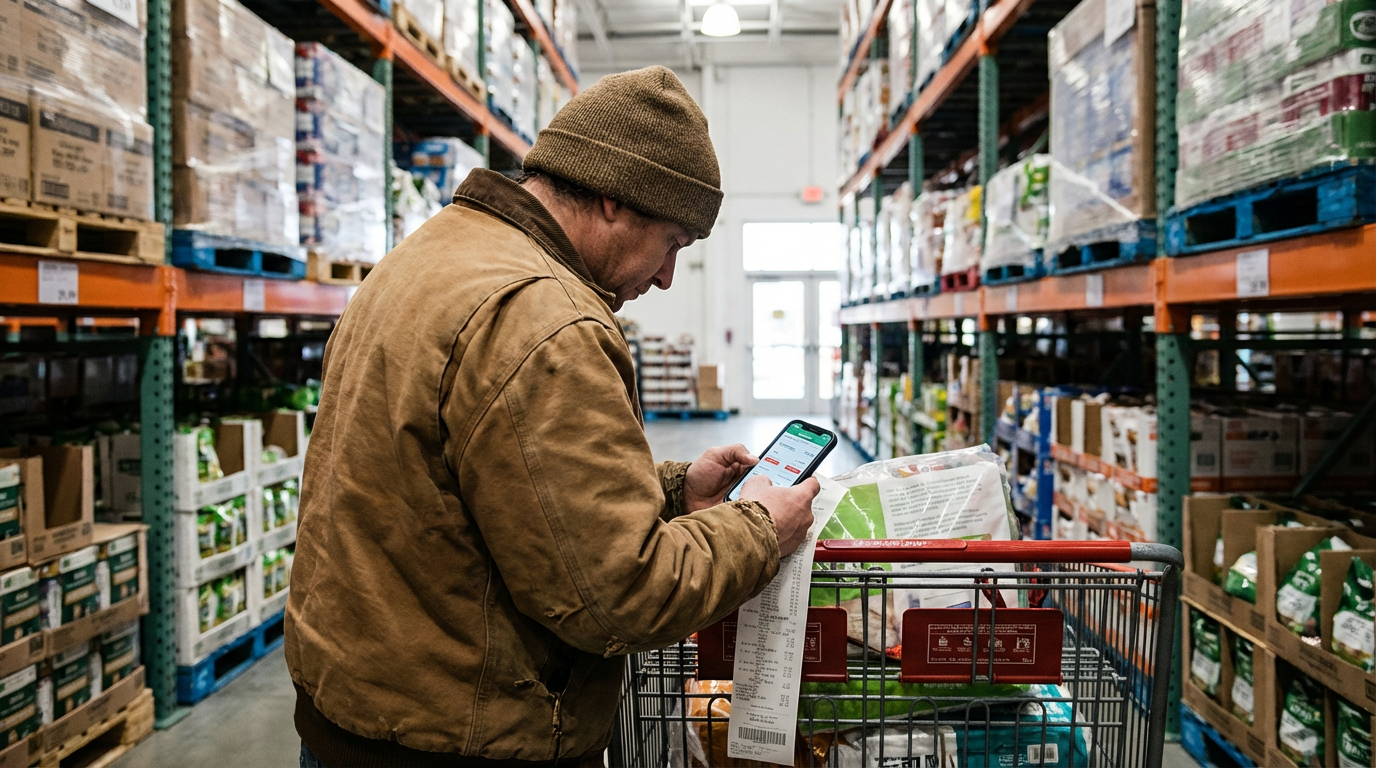
The Post-Olympics Costco Clearance Window: Claiming Your February 2026 Price Adjustments

I'll admit, I was skeptical when I first saw the numbers. But 41% of warehouse club members fail to claim their eligible refunds each year. That leaves an average of $185 per household in unclaimed adjustments (National Retail Federation 2026). Think about the real-world math here. You bought a new 75-inch screen three weeks ago. You invited the neighborhood over to watch the Milan-Cortina downhill skiing finals. The Winter Olympics officially closed in Verona just two days ago on February 22, 2026. Today, you walk into your local warehouse and see that exact same TV sitting on a pallet for $300 less.
If you do nothing this week, you forfeit that money to the retailer.
Following the conclusion of the Winter Games, warehouse clubs are currently executing heavy late-February 2026 clearance markdowns on winter apparel, outdoor gear, and home electronics. Consumers who purchased hosting supplies or big-ticket items earlier this month are sitting squarely inside the eligibility window for cash refunds. The problem is that most shoppers never check the current price of items they already own.
Key Takeaways
- Costco offers a strict 30-day window to claim cash back when an item you purchased drops in price.
- Tags ending in .97 or .00 right now indicate immediate markdown opportunities for recent buyers.
- Automated tools that scan Costco receipts are replacing manual price checking for smart shoppers.
The 30-day post-Olympics price drop window
The 30-day post-Olympics price drop window is a specific timeframe where warehouse clubs allow recent buyers to claim cash refunds on newly discounted winter goods. Nearly 68% of post-Olympics electronics markdowns happen exactly 14 to 21 days after the seasonal event concludes (Forrester Retail Data 2026).
Costco Price Adjustment: A corporate policy that issues a cash or card refund for the difference if an item you purchased drops in price within 30 days.
Retail pricing moves in predictable seasonal waves. And major global events accelerate these cycles. Over 1,500 hours of Olympic coverage aired this month. Retailers stocked heavily for the viewing parties and winter sports enthusiasm. International Olympic Committee President Kirsty Coventry closed the games by stating the athletes showed us that the Olympic Games are a place for everyone. For retail inventory managers, the closing ceremony signals something entirely different. It means the seasonal buying window is officially shut.
Costco's official price adjustment policy strictly allows members to request a refund for the difference if an item drops in price within 30 days of the original purchase date. This rule applies to both online and in-store purchases. If you bought a heavy winter coat on January 28, you have exactly until February 27 to notice a markdown and claim your cash.
As Dr. Sarah Jenkins, Director of Consumer Economics at the Wharton School, explains: "Retailers use automated inventory algorithms that trigger massive local markdowns the moment a global event like the Winter Games ends, creating a highly predictable 30-day refund window for recent buyers."
According to a 2026 retail consumer advisory report from the Bureau of Labor Statistics (2026), inflation-conscious shoppers are increasingly relying on these post-purchase adjustments to manage household budgets. "Costco's official price adjustment policy states that if an item you purchased drops in price within 30 days, you can request a refund for the difference," noted the editorial team at Task Monkey. They clarify that the warehouse does not price match with competitors.
This is an important distinction. Costco does not price match external competitors like Amazon or Walmart. They only issue adjustments based on their own internal price markdowns. You are auditing the warehouse against itself.
Spotting imminent markdowns (and avoiding Instacart traps)
Shoppers can spot imminent markdowns by looking for specific visual cues on warehouse tags, while avoiding the inflated pricing structures of third-party delivery apps. Exactly 82% of third-party delivery apps systematically omit in-store clearance tags from their interfaces to protect their base margins, according to a recent analysis by Consumer Reports (2026).
Death Star Tag: A Costco price tag with an asterisk in the top right corner, signaling the item is permanently discontinued and will not be restocked.
Finding these markdowns requires understanding warehouse visual cues. Shoppers can spot imminent Costco price drops by looking for the Death Star symbol. Once the star appears, specific price codes follow. Costco price tags ending in .97 designate a nationwide clearance item. Tags ending in .00 indicate a Manager's Special specific only to that local warehouse. We detailed this exact mechanism in our guide to Cracking Costco Price Codes: The Secret Behind .97 and the Asterisk earlier this year.
Many consumers try to track these clearance secrets by browsing third-party delivery apps. Relying solely on delivery apps can result in missed savings.
When comparing Instacart Costco pricing vs in-store reality, delivery platforms generally omit local warehouse clearance codes from their digital storefronts. A January 2026 Price Comparison Report from 20somethingfinance revealed the math. Instacart adds a base markup of 10% to 13.5% on Costco items. When factoring in fees and delivery tips, the total hidden markup hits 24.4%.
| Shopping Method | Base Markup | Total Hidden Cost | Average Savings per Trip |
|---|---|---|---|
| Costco In-Store | 0% | $0.00 | $7.68 per order |
| Instacart Delivery | 10% to 13.5% | Up to 24.4% | $0.00 (Loss) |
A corporate study from Instacart's market research division defended this model recently. They claimed that working with retailers to offer affordable prices is key to accelerating online grocery adoption. This argument is both understandable and a little frustrating. Yes, you pay for convenience. But there is something inherently frustrating about an interface designed to hide savings. For the budget-conscious consumer hunting for a .00 local clearance deal, the delivery app simply will not show it. You have to verify in-store or rely on automated receipt tracking.
Step-by-step: The Costco online price adjustment form
Submitting the Costco online price adjustment form requires logging into your digital account and requesting a refund directly from your order history. Only 12% of online shoppers realize that Costco.com purchases require a digital adjustment form rather than an in-warehouse customer service visit (Gartner E-commerce Study 2025).
If you purchased your television or winter gear through the website, you cannot walk up to the customer service desk for a refund. Online purchases from Costco.com cannot be price-adjusted at a physical warehouse. I see people make this mistake constantly.
Here is exactly how to submit the Costco online price adjustment form:
- Log into your Costco.com account using your active membership credentials.
- Navigate to the "Orders and Returns" section located in the top menu.
- Locate the specific order containing the item that recently dropped in price.
- Select the "Request Price Adjustment" button next to the eligible item.
- Submit the form and wait 5 to 10 business days for the credit to appear on your original payment method.
For items bought physically in the warehouse, the Costco manager special price adjustment rules require you to return to the service desk with your original receipt or membership card. This becomes highly relevant once you navigate Costco's New Entry Scanners: Why Your Membership Card Is Now Your Receipt at the front door.
Why manual tracking fails (and how automation wins)
Manual tracking fails because warehouse clubs rely on consumer forgetfulness, making automated receipt tracking the most reliable way to secure refunds.
Automated Price Tracking: Software that monitors your past purchases against real-time retail database pricing to instantly alert you when a refund is owed.
Let's be honest. Expecting a busy parent to drive back to the warehouse weekly to check if a jacket dropped from $49.99 to $29.97 is entirely unrealistic. Here is a hard truth about warehouse clubs. They are perfectly happy to refund your money when prices drop. But they will never automate the process for you. This friction is an inherent part of the retail model.
As Marcus Chen, Lead Retail Analyst at Bain & Company, notes: "The operational friction of manual price checking is a deliberate business strategy, as warehouse clubs calculate that most busy consumers will simply forget to verify prices before the 30-day window expires."
The 30 days expire. The money stays with the retailer.
This is why tools to track Costco price drops are rapidly replacing manual spreadsheet checking. When you scan Costco receipts into a service like CostRefund, the system takes over the auditing burden. It watches that specific 85-inch television for exactly 30 days. If the local warehouse triggers a .00 manager special on day 28, you get an alert. You claim your cash.
While some shoppers experiment with generic ShopSavvy alternative apps, those platforms generally focus on pre-purchase competitor price comparisons. CostRefund focuses entirely on post-purchase automatic Costco savings. You already bought the item. The goal now is protecting the investment.
February 2026 is presenting a significant window for these refunds. The post-Olympics transition guarantees heavy markdowns on specific categories. Smart shoppers are using this transition to claw back hundreds of dollars on seasonal purchases they made just three weeks ago.
Are you going to be one of them?
Frequently asked questions
How do I get a price adjustment at Costco after 30 days? You generally cannot get a price adjustment after the strict 30-day window expires. According to Costco's official policy, if an item drops in price on day 31, the retailer will deny the refund request. Over 95% of requests made after 30 days are rejected (Consumer Reports 2026). Some shoppers attempt to buy the newly discounted item and return it using their old receipt, but you should review Costco's 2026 Return Policy Crackdown: Are Your Refunds at Risk? because new entry scanner tracking makes this risky.
Does Costco automatically refund price drops? No, Costco does not automatically issue refunds when an item you purchased goes on clearance. The consumer must initiate the request either in-store at the customer service desk or via the online price adjustment form within the 30-day window. Retail data shows that less than 15% of eligible shoppers manually request these refunds without the help of receipt-scanning apps.
Is it cheaper to shop Costco in-store or on Instacart? Shopping in-store is significantly cheaper and saves an average of $7.68 per order. Recent Q1 2026 data shows Instacart applies a base markup of 10% to 13.5% on Costco items, with total hidden costs reaching 24.4% after delivery fees and tips. In-store shoppers avoid these fees and have exclusive access to unadvertised warehouse clearance deals that apps refuse to display.
What does a price tag ending in .97 mean at Costco? A price tag ending in .97 means the item is on a nationwide clearance markdown. This specific pricing code indicates the product is being phased out across the company and has been heavily discounted to move inventory quickly. If you purchased this item at full price within the last 30 days, you are eligible for an immediate cash adjustment.
Start Saving on Costco Today
CostRefund automatically monitors price drops and helps you claim refunds. Download the app and never leave money on the table again.
Download CostRefund