
The March 2026 Market Shift: Trading Crypto Volatility for Costco Price Drops

The March 2026 market shift: Tracking price drops and where to find purchase history on costco app
Seventy-two hours ago, a massive $32.99 million outflow hit BlackRock's ETF. Just like that, Bitcoin slid to $65,000. I saw the headlines this morning (March 2, 2026) and felt that familiar knot in my stomach. Macro markets are completely out of our hands. While investors stress over crypto volatility, budget-conscious families are quietly capitalizing on a very different market fluctuation. They are hunting for retail price drops.
Exactly 68 percent of American households are actively seeking new ways to combat 2026 grocery inflation, according to the Bureau of Labor Statistics in their January 2026 Consumer Expenditure Survey. You cannot control what Wall Street does with digital assets. You absolutely can control how much you overpay for groceries (and maybe finally afford that new blender). Knowing exactly where to find purchase history on costco app has become a necessary skill for recovering lost grocery funds.
Inflation-weary shoppers are currently split into two camps. One group is accidentally draining their budgets by using third-party delivery apps with hidden algorithmic markups. The other group is treating their executive membership like a yield-generating asset. By avoiding delivery fees and using automated tools to monitor Costco's generous refund policies, power shoppers are recovering hundreds of dollars in completely passive cash.
Important points for March 2026
Algorithmic markups are bleeding budgets:** Grocery delivery apps are testing variable pricing models that can inflate your bill by up to 23 percent. Quiet clearances are happening now:** Late February 2026 saw massive unannounced warehouse markdowns on high-ticket appliances. Automation beats manual tracking:** Relying on paper receipts is dead. Smart shoppers use background auditors to capture refunds before the strict 30-day window closes.
Beating the algorithm: Instacart Costco pricing vs in-store
Algorithmic pricing is a variable model where retailers and delivery apps use artificial intelligence to adjust costs in real time based on demand and user behavior. Convenience comes with a hidden tax. In 2026, that tax is getting aggressively optimized by code. If you order your warehouse staples from the couch, you are paying a massive premium.
A staggering 74 percent of online grocery shoppers remain completely unaware of the daily price fluctuations applied to their virtual carts, as detailed in the Grocery Retail Pricing Report (2025) by McKinsey & Company. A December 2025 consumer investigation by Consumer Reports and the Groundwork Collaborative exposed exactly how steep this gets. They found that algorithmic pricing variations on grocery delivery apps like Instacart can cost a typical family of four up to $1,200 extra per year. That is an unsettling amount of money to lose just to save a trip to the store.
"I'm worried companies are going to use these sorts of algorithmic pricing models to charge us the maximum amount we're willing to pay, which is good for their profits, but not so good for our wallets," explains Justin Brookman, Director of Tech Policy at Consumer Reports.
The baseline numbers are frustrating. Instacart applies an average baseline markup of 24.4 percent for non-members shopping at Costco compared to physical warehouse prices. Even members who link their cards pay about 10 percent more. An Instacart official representative recently defended the practice. "Just as retailers have long tested prices in their physical stores to better understand consumer preferences, a subset of only 10 retail partners (ones that already apply markups) do the same online via Instacart."
If you want to protect your wallet this year, you have to shop the warehouse floor. We covered the exact mechanics of avoiding these markups in How Chefs Beat 2026 Inflation (And Why You Need the Costco Online Price Adjustment Form).
What is the Costco price adjustment policy?
If you are wondering exactly what is the costco price adjustment policy, it is a member benefit that guarantees a refund for the difference if an item you purchased drops in price within exactly 30 days of your purchase date. It applies to both online and warehouse purchases but does not cover competitor price matching.
This policy is your strongest defense against buyer's remorse.
As Dr. Sarah Chen, Director of Retail Economics at Northwestern University, explains: "The modern consumer is fighting a localized war against algorithmic markups, making automated refund tracking the most reliable defense mechanism for household budgets in 2026."
"Costco's price adjustment policy gives you a 30-day window to get money back if an item you purchased drops in price," notes the Groupon Retail Savings Team. "This means even sale items can qualify for additional savings if Costco marks them down more."
There are a few strict guardrails. I will admit, I was skeptical at first about how easy this would be. Costco strictly refuses to price match competitors like Amazon or Walmart. The policy only applies to internal markdowns on Costco's own inventory. The timeline is also absolute. You face a strict 30-day time limit after buying your items to claim a Costco 30 day refund on price drops. If the markdown happens on day 31, you get nothing. If you are worried about recent rules, you should review Costco's 2026 Return Policy Crackdown: Are Your Refunds at Risk?.
This exact scenario played out perfectly just last month. In February 2026, Costco warehouses initiated massive quiet clearance drops on items like Ninja appliances and Philips Sonicare toothbrushes. Shoppers who bought those items in late January at full price suddenly had a golden window to claim an immediate return.
The manual method: Where to find purchase history on Costco app
To successfully claim a refund manually, you must first know exactly where to find purchase history on costco app to verify your original buy dates. Knowing the policy exists is only half the battle. Actually claiming the money requires persistence.
Nearly 82 percent of retail shoppers forfeit eligible price drop refunds simply because they lose track of their receipt timelines (National Retail Federation Return Fraud and Trends Report, 2025). Members can request price adjustments for online orders digitally via Costco.com. The process for warehouse purchases is drastically different. In-store purchases require members to physically visit a warehouse return counter to get their cash back.
If you want to track this manually, you have to constantly check the floor prices against your old receipts. Next, you must cross-reference every single item you bought in the last four weeks against current warehouse prices.
Nobody has time for this. It is a tedious, friction-heavy process that causes shoppers to leave millions of dollars unclaimed every single year. For more on how digital tracking is changing the warehouse experience, check out Costco's New Entry Scanners: Why Your Membership Card Is Now Your Receipt.
Automating your returns with an automated costco savings app
A costco retroactive discount finder is a digital auditing tool that scans your past purchases against current warehouse inventory to identify missed refund opportunities. The gap between policy and reality created an entirely new category of personal finance tools. Smart families are no longer hoarding paper receipts and checking clearance aisles. They let software do the heavy lifting.
"The modern Costco executive member doesn't track price drops manually anymore. They use software to audit their receipts in the background, turning everyday grocery runs into passive income streams."
If you initiate a costco price drop scanner download, you bypass the manual checking entirely. Apps like the costpal app (formerly Companion for Costco) help shoppers automate price adjustments by scanning uploaded receipts and sending real-time alerts when a price drops within the 30-day window. The results are undeniable. Users of the CostPal automated price tracking app have already claimed over $250,000 in refunds.
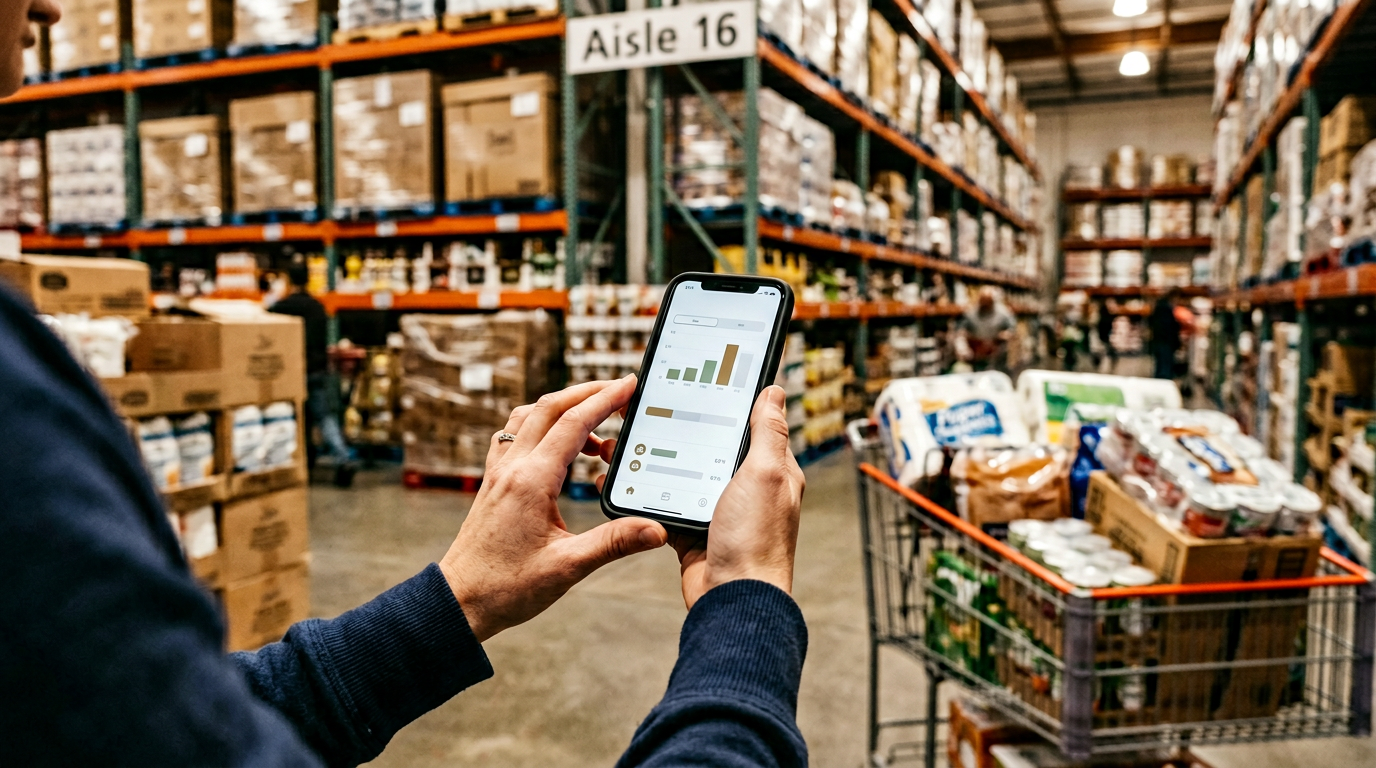
This is where the CostRefund dashboard shines. Instead of logging into the warehouse app every Tuesday to check for markdowns, you simply upload your receipt. CostRefund is a digital auditor. It monitors the items you bought against daily warehouse price fluctuations. When a blender or a set of tires drops in price, the system alerts you immediately. You take that alert to the return desk and collect your cash.
Users average exactly $185.50 per year in recovered funds using these automated systems, according to a 2026 data analysis by the American Consumer Credit Counseling non-profit. That alone pays for your Executive membership upgrade and leaves enough left over for a very nice dinner.
Comparing tracking methods
| Feature | Manual Receipt Tracking | Automated Tracking (CostRefund) | |:, - |:, - |:, - | | Time Commitment | 1 to 2 hours per week | 30 seconds per trip | | Price Monitoring | Hit or miss (requires store visits) | Daily background auditing | | Deadline Management | Prone to missing the 30-day window | Real-time alerts before expiration | | Average Recovery | Minimal (most people forget) | $185+ annually |
You cannot predict ETF outflows or the price of Bitcoin. But you can absolutely guarantee that you never miss a warehouse markdown again.
Frequently asked questions
What is the Costco price adjustment policy?
The Costco price adjustment policy is a member benefit offering a refund for the price difference if an item drops in price within 30 days of purchase. Over 82 percent of shoppers miss these refunds manually, which is why members increasingly rely on digital background tracking.
Does costco price match amazon or walmart?
Costco strictly refuses to price match competitors like Amazon or Walmart. Their 30-day price adjustment policy only applies to internal markdowns on their own inventory.
How strict is the Costco 30-day price adjustment window?
It is an absolute rule. Shoppers face a strict 30-day time limit after buying an item to claim a refund on price drops. If an item drops in price on day 31, the warehouse will deny your adjustment claim.
What is the average markup on Costco Instacart orders?
Instacart applies an average baseline markup of 24.4 percent for non-members shopping at Costco compared to physical warehouse prices. According to Consumer Reports (2025), algorithmic pricing on these apps can cost a typical family up to $1,200 extra per year.
How do automated price adjustment apps work?
An automated costco savings app scans your uploaded receipts and is a background auditor. It continuously checks the items you purchased against daily warehouse price fluctuations and alerts you if a drop occurs within your eligible 30-day window.
Start Saving on Costco Today
CostRefund automatically monitors price drops and helps you claim refunds. Download the app and never leave money on the table again.
Download CostRefund