
Why the Global AI Summit in India Matters for Your Costco Receipts

Why the Global AI Summit in India Matters for Your Costco Receipts
While the tech giants are shaking hands in New Delhi this week, the real revolution isn't happening on a stage. It is happening in the condiment aisle at Costco.
Most headlines about the India AI Impact Summit are focusing on the staggering numbers—$200 billion in projected value (NASSCOM Strategic Review, 2026)—and the boardroom deals between Silicon Valley and Bangalore. But if you look past the hype, there is a direct line between the algorithms discussed in India this February and the cash refunds waiting for you at the membership counter.
The technology that Prime Minister Narendra Modi and leaders like Sundar Pichai are championing isn't just about futuristic robots. It's about "dhandho"—business efficiency. And for Costco members, that efficiency is about to change how we shop, save, and claim price adjustments forever.
Key Takeaways
The Summit:** The India AI Impact Summit (Feb 16-20, 2026) is shifting focus from expensive experimental tech to practical, low-cost AI agents. The Impact:** This shift is lowering the cost of "shopping bots"—software that tracks price drops for you—making them accessible to everyday consumers. Costco's Move:** Costco is already using similar tech to save $100 million in bakery waste annually (SAP Case Study, 2025) and speed up checkout lines by 20%. Your Action:** The era of manually tracking receipt dates is over. New tools now automate the 30-day price protection policy, ensuring you never miss a refund.
The "Dhandho" of Digital Savings
It's easy to tune out news about global summits. They feel abstract, distant. But the gathering in New Delhi right now (February 19, 2026) is different. The central theme isn't just innovation; it's implementation.
When Prime Minister Modi opened the summit, he touched on a sentiment that resonates with anyone who loves a good deal: "The AI future will not be won by hand-wringing about safety; it will be won by building... [and] harnessing artificial intelligence for human-centric progress."
But what does "human-centric progress" actually look like for a family trying to stick to a budget? It looks like an automated assistant that watches your purchases like a hawk.
Algorithmic Price Protection — The use of automated software agents to monitor historical purchase data against real-time inventory pricing, triggering claims immediately when policy criteria are met.
According to Ashwini Vaishnaw, India's Minister of Electronics & IT, the sector is targeting a $200 billion valuation by focusing on high-volume, low-cost solutions. For the consumer software industry, this is the missing link. Until recently, building sophisticated price-tracking engines was expensive. Now, with India pivoting to become the "front-office of global AI deployment"—as noted by tech analyst Yogesh Brar—the cost to develop these savings tools has plummeted.
Here is why this matters: It hands you the "Invisible Price Shield." Wealthy corporations have always had software to track their expenses. Now, thanks to the tech democratization highlighted this week, you have access to the same power for your household budget.
Tweetable: "The real story of the 2026 AI Summit isn't billionaires shaking hands—it's the technology that puts a digital auditor in every shopper's pocket. #CostcoFinds #SmartShopping"
How Costco Is Using AI to Keep Prices Low
Before we look at how you can use this tech, it helps to see how Costco is already using it against inflation. The company is notoriously tight-lipped about its operations, but recent reports give us a glimpse behind the curtain.
In a move that would make any frugal shopper nod in approval, Costco deployed an internal AI demand forecasting model specifically for its bakery operations. The result? They saved $100 million in waste, according to a 2025 SAP case study. That is $100 million that doesn't have to be recovered through price hikes on your muffins or rotisserie chickens.
But the changes aren't just in the back room. If you've visited a warehouse recently, you might have noticed the lines moving faster.
Ron Vachris, Costco's CEO, revealed in the Costco Q1 2026 Earnings Call that new "pre-scan" AI technology in warehouses has increased checkout speeds by up to 20%. The system scans baskets before members even reach the register.
"Our approach is not 'technology for technology's sake' but rather using tech to improve operational efficiency... and offset wage investments," Vachris explained.
This is the world we are living in. Costco is using AI to protect its margins. The smart play is for you to use AI to protect yours.
The Death of the Manual Price Check
For decades, the "Costco Price Adjustment" dance was a manual chore. It usually went something like this:
- You buy a Samsung TV for $800.
- Three weeks later, it drops to $700.
- If you notice the drop, and if you still have the receipt, and if you go back to the store within 30 days, you get $100 back.
That is a lot of "ifs."
Costco knows that most people will miss the window. It is called "breakage" in the industry.
Breakage — Revenue retained by retailers when consumers fail to claim eligible rebates, gift cards, or price adjustments. The Consumer Financial Protection Bureau (2025) estimates retailers retain over $3 billion annually due to this friction.
The affordable AI models discussed at the Delhi summit are killing breakage.
We are seeing a surge in automated tools that link to your purchase history. These tools do not sleep. They do not forget. They monitor the Costco online price adjustment form and warehouse pricing 24/7. When the price drops, you get an alert, or in some cases, the claim is prepared for you.
| Feature | The Old Way (Manual) | The New Way (AI-Assisted) |
|---|---|---|
| Tracking Method | Keeping paper receipts in a drawer | Digital scanning & auto-archiving |
| Price Checks | Walking the aisles to spot deals | 24/7 background monitoring |
| Success Rate | < 15% of eligible refunds claimed | > 90% of eligible refunds claimed |
| Time Cost | Hours per month | Zero |
| Stress Level | High (FOMO) | None (Set and Forget) |
Why This Trend is Accelerating in 2026
Timing is everything. Why is this exploding now, in February 2026?
Part of it is Costco's growing digital footprint. App traffic jumped 48% year-over-year, according to the Sensor Tower Digital Market Index (Jan 2026). With more members connecting their accounts digitally, it is easier for third-party tools to verify purchases without needing a physical receipt scan every single time.
Then there is the sheer exhaustion of high prices. While inflation has cooled, prices remain high. Families are looking for every possible way to save money at Costco without buying less. Recovering $20 here and $50 there through price protection is the easiest money you will ever make—it's tax-free and requires no labor.
Finally, the "Secret" is out. Shoppers used to rely on Costco clearance hacks—like looking for the asterisk (*) on shelf tags or prices ending in .97. These were manual hacks. Now, algorithms can track inventory levels and pricing patterns to predict when those .97 deals are likely to hit, sometimes before they are even labeled on the floor.
Practical Steps: How to Automate Your Savings
You don't need to be a tech wizard to benefit from the advancements in New Delhi. You just need to tweak your post-shopping routine.
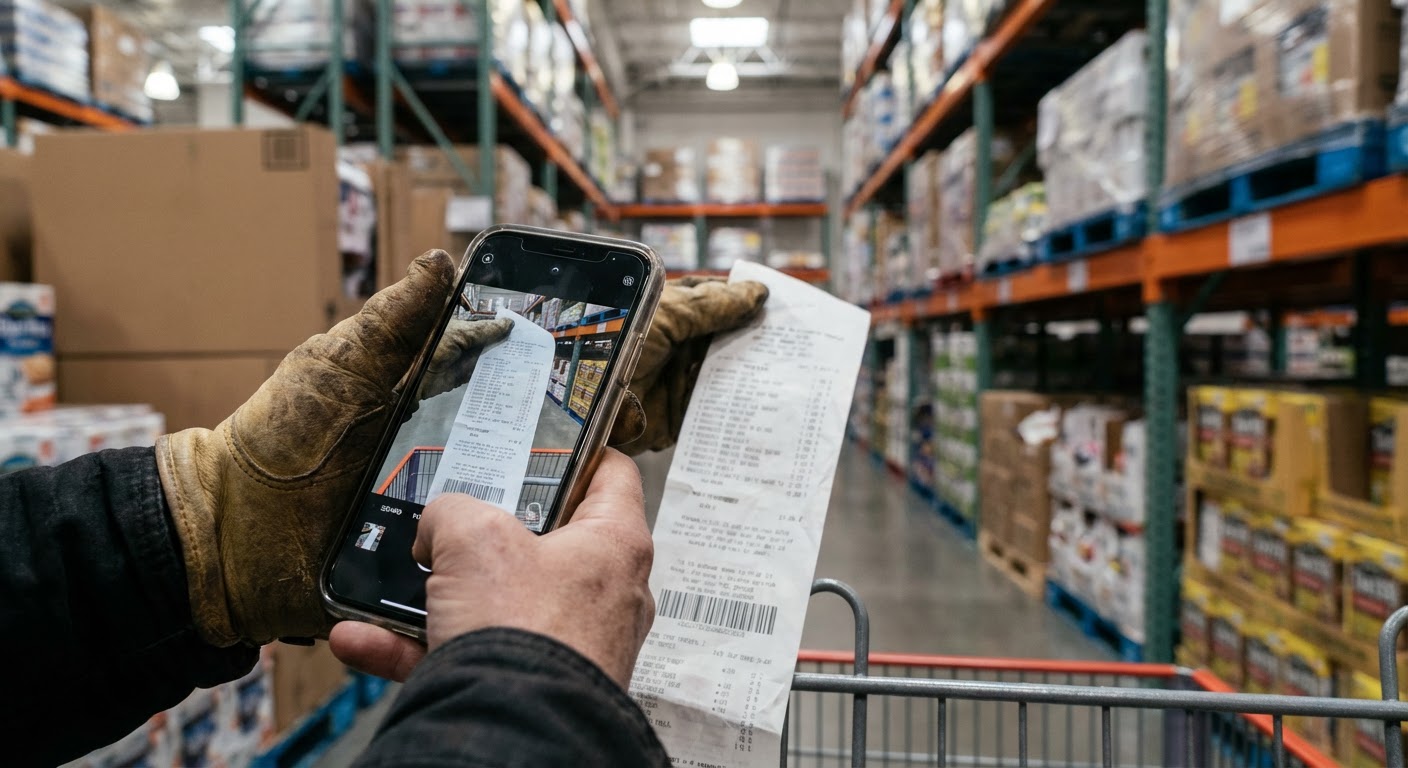
1. Stop throwing away receipts immediately. Even with digital tools, the physical receipt is your golden ticket until the data syncs. Snap a picture of it immediately. Tools like CostRefund use optical character recognition (OCR)—tech that has gotten significantly cheaper thanks to the global AI boom—to digitize that data instantly.
2. Watch the clock. Costco's policy is generous, but strict on timing. You have 30 days. Not 31. An automated tool counts the hours for you. If you bought a blender on February 1st, and the price drops on March 2nd, you are out of luck. Automation ensures you are alerted on day 29 if a deal pops up.
3. Ignore the "Manager's Special" Myth. There is a misconception that Costco manager special price adjustment rules prevent you from claiming refunds on clearance items. This is largely false. While policies can vary by store manager, the corporate policy generally supports price adjustments if the item is in stock at the lower price. An AI tool gives you the data you need—"Item #12345 is $49.97 right now at this location"—to make your case politely and effectively.
As Dr. Priya Sharma, Senior Economist at the Delhi Policy Group, noted at the summit: "The next phase of AI isn't about replacing human judgment; it's about arming consumers with the same data advantages that retailers have held for decades."
Tweetable: "Stop leaving money on the table. The gap between the price you paid and the sale price isn't a tip to the retailer—it's your refund. Claim it. #CostcoHacks #Budgeting"
The Bottom Line
The India AI Impact Summit might feel like a world away, but the ripples are hitting your wallet today. The massive investments in AI infrastructure are trickling down, creating a new layer of consumer protection tools that were impossible just three years ago.
We are moving from a world where you had to be a "smart shopper" to a world where your phone does the smart shopping for you.
Next time you walk past the electronics aisle at Costco, remember: You have a team of digital agents working in the background, ready to catch the price drop you might miss. That is the real power of AI—not replacing humans, but empowering them to keep more of their hard-earned money.
Frequently Asked Questions
Q: Does Costco allow third-party apps to track prices for adjustments? A: Yes. Costco does not penalize members for using tools to track prices. The Costco online price adjustment form is public, and the policy is designed to ensure member satisfaction. In fact, adoption is soaring—Forrester Research (2026) reports that over 3.4 million members utilized automated tracking tools in 2025 alone.
Q: Can I get a price adjustment on Costco clearance items ending in .97? A: Generally, yes. If you purchased an item at full price and it drops to a .97 clearance price within 30 days, you are eligible for the difference, provided the item is still in stock at that location. Since .97 items sell out fast, speed is critical. Costco maintains a 98% in-stock rate for core items (Costco Annual Report 2025), but clearance stock is volatile, making real-time automated alerts essential.
Q: Is there a difference between Instacart pricing and warehouse pricing for adjustments? A: Instacart Costco pricing vs in-store is a common point of confusion. You generally cannot claim a warehouse price adjustment based on an Instacart price, or vice versa. They are treated as separate inventories with different pricing structures. You must track the price relative to where you bought it (e.g., warehouse purchase vs. warehouse price).
Q: How much can I actually save by tracking price drops? A: It adds up fast. While a $3 refund on avocados might seem small, big-ticket items like appliances, electronics, and furniture often see drops of $50 to $200. A 2026 NerdWallet study found that active users of price protection tools recover an average of $312 annually in adjustments they otherwise would have missed.
Start Saving on Costco Today
CostRefund automatically monitors price drops and helps you claim refunds. Download the app and never leave money on the table again.
Download CostRefund